Choosing a titanium vs plastic cutting board is a trade-off between hygiene and knife care: titanium is a non-porous metal cutting board that resists bacteria and sheds no polymer particles, while plastic stays gentler on knife edge retention and costs less upfront. This guide compares durability, dishwasher safe cleaning, food safety, and real kitchen use cases so you can match the kitchen prep surface to how you cook.
Titanium vs. Plastic Cutting Boards
Titanium vs plastic cutting boards rarely compete at wholesale scale: titanium is tough but costly, while virgin PP/HDPE boards remain the practical OEM path for knife feel, private-label branding, and FDA/LFGB food-contact programs.
Choosing the right kitchen prep surface directly impacts kitchen hygiene, prep efficiency, and overall tool longevity. In the debate between a titanium vs plastic cutting board, home cooks and professional kitchens must weigh traditional convenience against modern, heavy-duty material innovations. While plastic has long dominated standard food prep environments, titanium cutting boards provide an ultra-durable, non-porous alternative engineered for high-performance safety.
What Are Titanium Cutting Boards?
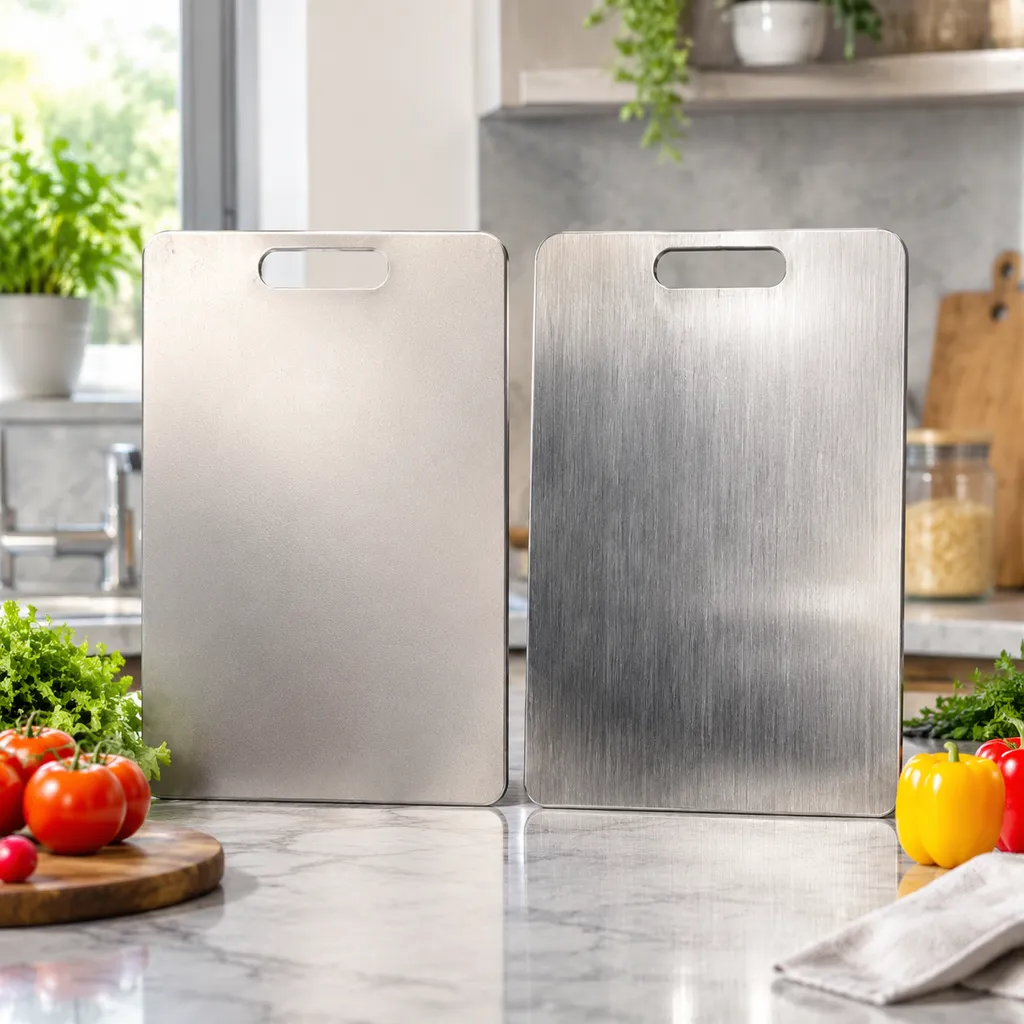
A titanium cutting board is an advanced metal cutting board engineered from food-grade, solid titanium sheet metal. Built to handle heavy daily prep without degrading, it serves as a modern, high-sanitation prep surface.
Key characteristics include:
Non-Porous Surface: Completely resists liquids, raw meat juices, and stubborn food pigments.
Structural Durability: Will not crack, warp, peel, or shatter under continuous kitchen use.
Zero Particle Shedding: Eliminates the risk of food contamination from synthetic shavings.
Corrosion Resistance: Immune to food acids, salts, and harsh cleaning agents.[3]
How Do Plastic Cutting Boards Compare?
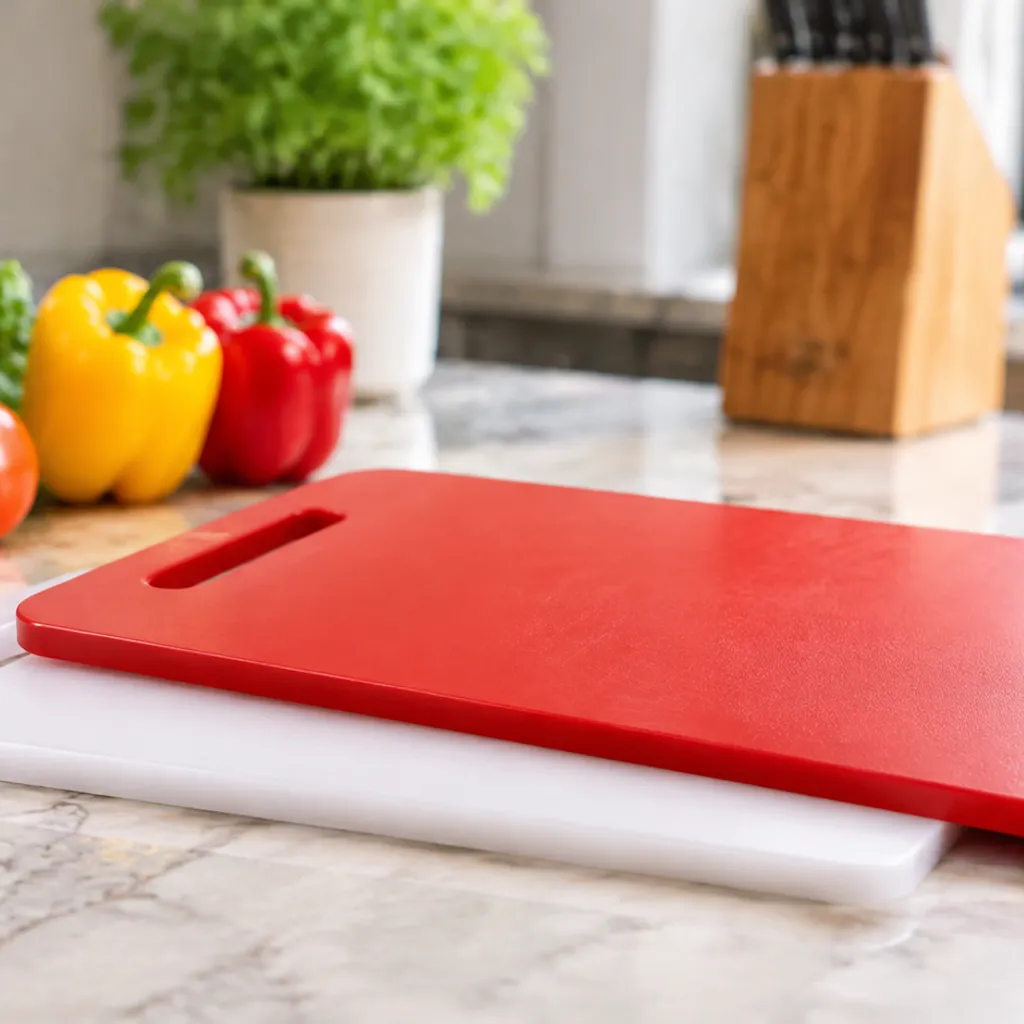
Plastic cutting boards - typically manufactured from high-density polyethylene (HDPE) or polypropylene - are the most ubiquitous food preparation surfaces in domestic and commercial kitchens. They are lightweight, affordable, and softer on knife blades during high-impact chopping.
However, their softer structural composition brings distinct trade-offs:
Deep Groove Formation: Knives easily score the surface, leaving serrated micro-channels.
Sanitation Challenges: Score marks create difficult-to-clean recesses that trap bacteria and absorb food odors.
Microplastic Generation: Constant friction and blade contact slice away microplastics directly into prepared ingredients.[2]
Limited Lifespan: Plastic boards warp over time when exposed to heat and require frequent replacement once deep scarring occurs.[1]
Key Differences: Titanium vs. Plastic Cutting Boards
Titanium vs plastic cutting boards rarely compete at wholesale scale: titanium is tough but costly, while virgin PP/HDPE boards remain the practical OEM path for knife feel, private-label branding, and FDA/LFGB food-contact programs.
Choosing between a titanium vs plastic cutting board comes down to how you balance surface resilience against blade wear. Both materials serve as functional food prep platforms, but their physical structures lead to vastly different day-to-day kitchen experiences.
| Feature | Titanium Cutting Board | Plastic Cutting Board |
|---|---|---|
| Material Hardness | Extremely high (solid metal) | Soft to medium (polyethylene / polypropylene) |
| Knife Edge Retention | Requires frequent blade honing | Gentle on knife edges |
| Surface Degradation | Scratch-resistant; zero material shedding | Prone to deep gouges and micro-grooves |
| Odor & Stain Resistance | Complete resistance; non-porous | Absorbs pigments and strong odors over time |
| Dishwasher Tolerance | Impervious to extreme heat | Susceptible to heat warping over extended cycles |
Durability and Lifespan
A solid titanium cutting board will never snap, splinter, or warp under standard kitchen stress. Plastic boards degrade as knives repeatedly bite into the surface, leaving visible score marks and flaked edges over months of regular chopping. While heavy-duty options like our custom plastic cutting boards provide prolonged commercial resilience, standard consumer plastic boards inevitably thin out and reach an expiration date where replacement is the only sanitary choice.
Knife Blade Impact and Edge Retention
Knife edge retention is the primary trade-off when evaluating metal prep surfaces. Titanium is a rigid metal surface. While it does not chip blades like glass or stone, the continuous contact will roll and dull a fine knife edge faster than a forgiving plastic prep surface. Much like the dynamics seen when testing a titanium vs stainless steel cutting board, cutting on metal demands more frequent blade maintenance and regular honing. In contrast, plastic absorbs the impact of the blade tip, cushioning every slice and preserving your knife's sharp bevel for significantly longer prep sessions.
Hygiene, Odors, and Stain Resistance
Hygiene represents the strongest argument for metallic prep surfaces. Titanium is naturally non-porous. It does not absorb juices from raw poultry, pungent garlic oils, or staining pigments from beets and carrots. Because the surface resists deep scoring, there are no microscopic crevasses where bacteria can hide and multiply.[1] Plastic boards, on the other hand, develop hundreds of micro-grooves from everyday knife cuts. These crevices trap food debris, create lingering odors, and demand aggressive scrubbing or chemical bleaching to stay truly sanitary.
Maintenance and Dishwasher Safety
Both options qualify as dishwasher safe cutting board materials, but they handle thermal stress differently:
- Titanium: Completely unaffected by high-temperature sanitize cycles, commercial heat dry settings, or aggressive detergents. It dries quickly without moisture retention.
- Plastic: Convenient for fast cleanup, but recurring exposure to bottom-rack dishwasher heating elements often causes thin plastic boards to bend, cup, or bow, leaving an uneven and unsafe rocking surface on the countertop.
Food Safety Risks of a Titanium vs Plastic Cutting Board
Titanium vs plastic cutting boards rarely compete at wholesale scale: titanium is tough but costly, while virgin PP/HDPE boards remain the practical OEM path for knife feel, private-label branding, and FDA/LFGB food-contact programs.
When comparing a titanium vs plastic cutting board, hygiene and food safety remain top priorities for any modern kitchen prep surface. Both materials interact differently with food acids, moisture, and knife edges, directly impacting what ends up on your plate.
Microplastics and Surface Shedding
Repeated slicing quickly marks plastic prep surfaces. Every deep knife groove can shave off tiny synthetic fragments that transfer directly into ingredients. Evaluating your board's composition - such as understanding the specific plastic cutting board material you use daily - is essential for minimizing particle release.
- Microplastic Contamination: Standard synthetic boards degrade over time, shedding polymer flecks directly into raw produce and proteins.[2]
- Zero Shedding with Metal: A solid metal cutting board made of pure titanium will not peel, chip, or flake particles into your meal.
- Non-Toxic Kitchenware: Titanium offers an inert, completely non-toxic food contact zone that leaves zero chemical residues behind.
Bacterial Growth and Sanitation
Deep gouges in polymer surfaces create hard-to-clean crevices where bacteria, odors, and food juices linger. While comparing options like a polyethylene vs polypropylene cutting board helps you choose tougher resins, synthetic surfaces still scratch and degrade with heavy use.
- Poreless Construction: Titanium provides a fully non-porous surface, offering superior bacteria resistance because liquids and raw meat juices cannot penetrate the core.
- Hygienic Cutting Board Cleaning: Titanium rinses clean instantly without trapping raw poultry juices or stubborn seafood aromas.
- Long-Term Food Safety: Plastic boards require aggressive bleaching once deep knife grooves develop, whereas smooth metal surfaces maintain their sanitary properties without special chemical treatments.[1]
Pros and Cons of Titanium Cutting Boards
Titanium vs plastic cutting boards rarely compete at wholesale scale: titanium is tough but costly, while virgin PP/HDPE boards remain the practical OEM path for knife feel, private-label branding, and FDA/LFGB food-contact programs.
When comparing a titanium vs plastic cutting board, weighing the real-world trade-offs helps you decide if metal belongs on your countertop. As kitchenware specialists producing professional prep gear, we evaluate materials based on daily performance, safety, and longevity.
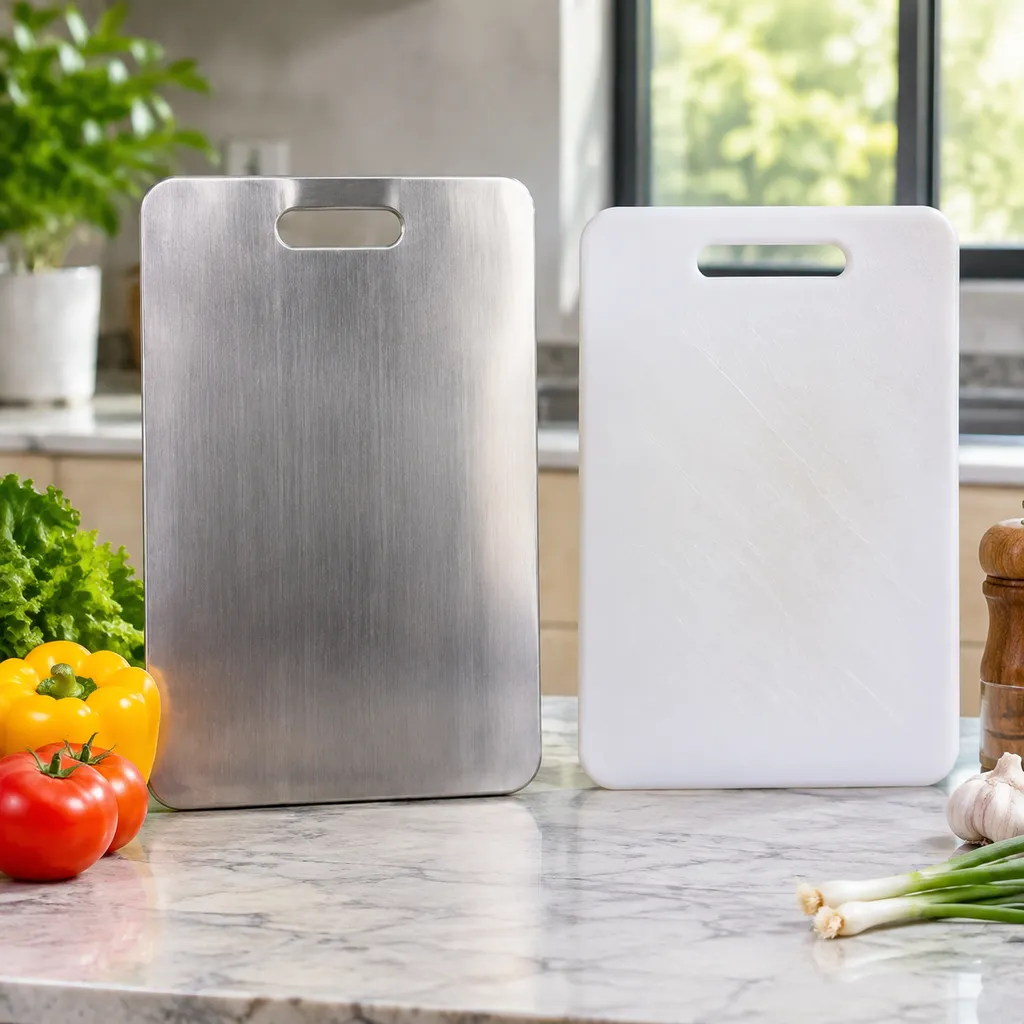
Advantages of Titanium Boards
A metal cutting board made of pure titanium solves several major headaches common to soft plastic boards:
- Zero Microplastics: Titanium will not shred or flake off into food, making it an ideal choice for households seeking non-toxic kitchenware.
- Superior Hygiene: The dense, non-porous structure provides exceptional bacteria resistance. It never absorbs raw meat juices, strong odors, or stubborn stains like garlic or beets.
- Extreme Durability: A titanium board resists warping, bending, and cracking under hot water or heavy everyday use.
- Effortless Maintenance: It is completely dishwasher safe, dries in minutes, and requires no oiling or resurfacing over its lifetime.
Drawbacks and Limitations
Despite the clear sanitary benefits, titanium has specific operational downsides to consider:
- Knife Edge Retention: Titanium is significantly harder than standard food-grade polymers. Slicing on hard metal accelerates knife dulling, meaning high-end chef knives require more frequent honing and sharpening.
- Slippery Prep Surface: Metal lacks the natural grip of textured plastic. Without rubberized corner grips, a flat metal slab can slide across polished granite or quartz countertops. For tasks requiring complete stability, pairing your setup with custom non-slip cutting boards offers a safer, more controlled surface.
- Cutting Noise: Metal-on-metal contact creates an audible tap or scrape during fast prep work, which some cooks find unpleasant compared to the muted thud of plastic or wood.
- Initial Cost: Premium titanium boards carry a notably higher upfront price tag than budget-friendly plastic alternatives.
Pros and Cons of Plastic Cutting Boards
Titanium vs plastic cutting boards rarely compete at wholesale scale: titanium is tough but costly, while virgin PP/HDPE boards remain the practical OEM path for knife feel, private-label branding, and FDA/LFGB food-contact programs.
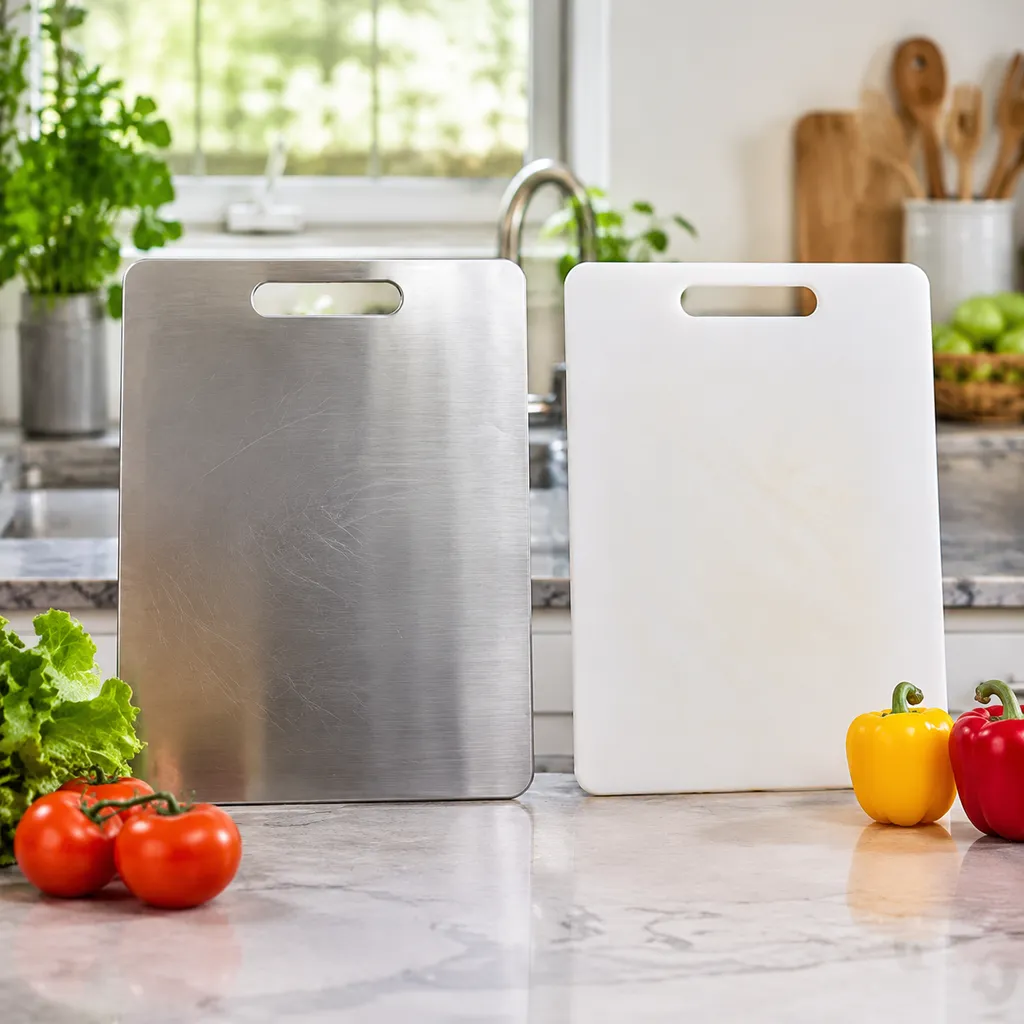
When comparing a titanium vs plastic cutting board, plastic remains the most common fixture in everyday kitchens. Understanding its strengths and trade-offs helps determine whether synthetic surfaces still serve your prep routine effectively.
Advantages of Plastic Boards
- Gentle on Knife Edges: The softer polymer structure provides enough give to maintain knife edge retention, preventing premature dulling or blade chipping during daily chopping.
- Dishwasher Safe Sanitation: Most high-density polyethylene boards tolerate high wash temperatures, making rapid sanitizing simple and dependable.
- Budget-Friendly Accessibility: Plastic options are cost-effective to produce and replace, whether you need standard utility mats or specialized kitchenware like a 16-inch round plastic cutting board.
- Lightweight Utility: Easy to lift, wash, and store, making them practical for fast-paced prep work and high-volume meal preparation.
Drawbacks and Limitations
- Knife Scarring and Microplastics: Over time, sharp blades carve permanent grooves into the plastic. Repeated slicing against these wear points can shed microscopic plastic particles into prep ingredients.[4]
- Bacterial Harboring in Grooves: Deep cut lines become difficult to clean thoroughly, creating narrow pockets where moisture, food residue, and bacteria can linger.
- Odor and Stain Absorption: Pigmented foods like carrots and beets, along with pungent ingredients like garlic, easily discolor and permeate the surface - a contrast highlighted in our detailed wood vs plastic cutting board comparison.
- Frequent Replacement Cycle: Unlike permanent metal surfaces, scarred plastic boards must be retired and replaced routinely to maintain proper kitchen hygiene.
Best Uses for a Titanium vs Plastic Cutting Board
Titanium vs plastic cutting boards rarely compete at wholesale scale: titanium is tough but costly, while virgin PP/HDPE boards remain the practical OEM path for knife feel, private-label branding, and FDA/LFGB food-contact programs.
Choosing between a titanium and a plastic cutting board comes down to the ingredients you prepare and how you treat your knives. Each material serves distinct roles on the prep station.
| Prep Task | Titanium Board | Plastic Board |
|---|---|---|
| Raw Meat, Poultry & Fish | Best choice (non-porous, zero cross-contamination risk) | Good (requires thorough sanitizing to clear grooves) |
| High-Volume Veggie Chopping | Firm surface (causes faster blade wear) | Best choice (cushions blade strikes) |
| Rolling Pastry & Dough | Excellent (cool surface, non-stick feel) | Poor (tends to slide or texture the dough) |
| Thawing Frozen Meats | High thermal conductivity speeds up thawing | Slow natural thaw |
| Heavy Cleaver / Bone Chopping | Not recommended (can dent blades or board) | Usable (absorbs deep impacts) |
When to Choose a Titanium Cutting Board
We recommend reaching for a titanium cutting board when hygiene, stain resistance, and temperature management take priority over heavy slicing:
- Handling Raw Proteins: Titanium provides an impenetrable kitchen prep surface. Juices from raw chicken, pork, or seafood wash off completely with no trapped bacteria or lingering smells.
- Rapid Defrosting: The thermal transfer properties of a metal cutting board help thaw frozen steaks and burger patties significantly faster than plastic or wood.
- Dough and Pastry Prep: The naturally cool, smooth metal face prevents butter from melting too quickly when shaping pie crusts or kneading dough. If you need larger continuous metal prep areas, exploring a custom stainless steel cutting board delivers similar non-stick, non-porous working benefits.
- Serving and Carving: It doubles as a sleek, modern serving platter for cooked meats and cheeses that won't absorb grease.
When to Choose a Plastic Cutting Board
A plastic cutting board remains the everyday workhorse for routine meal preparation and preserving sharp blade edges:
- Daily High-Impact Chopping: For dicing onions, mincing garlic, and slicing delicate herbs, the give of high-density plastic protects fine Japanese and German knife edges from flattening.
- Color-Coded Kitchen Systems: Commercial and home kitchens use distinct colors to separate produce, poultry, and allergens. A dedicated plastic HDPE white cutting board provides a reliable, knife-friendly station strictly for everyday fruit and vegetable prep.
- Budget-Friendly Kitchen Setups: When equipping a prep line with multiple work surfaces on a limited budget, plastic delivers dependable utility at a fraction of the cost of solid metal boards.
How to Choose a Titanium vs Plastic Cutting Board
Titanium vs plastic cutting boards rarely compete at wholesale scale: titanium is tough but costly, while virgin PP/HDPE boards remain the practical OEM path for knife feel, private-label branding, and FDA/LFGB food-contact programs.
Deciding between a titanium vs plastic cutting board comes down to how you balance blade care, hygiene, and product lifespan. As a dedicated kitchenware manufacturer, we see firsthand how the wrong kitchen prep surface can either wear down your knives prematurely or introduce unwanted contaminants into your food.
Evaluating Your Knife Collection and Cooking Style
Your prep routines and cutlery dictate the ideal surface:
- Delicate, High-Carbon Blades: If you work with thin, high-hardness Japanese steel, plastic offers a softer landing that protects delicate edges, though it requires frequent sanitization.
- Heavy Raw Meat and Protein Prep: A metal cutting board made of pure titanium provides unmatched bacteria resistance and zero odor retention, making it the safer choice for processing raw poultry, seafood, and red meat.
- Everyday Rough Chopping: Heavy cleaver work and rapid rocking cuts can be harsh on metal boards. For general prep, matching your task to the material prevents knife edge dulling while keeping your food prep strictly non-toxic.
| Feature | Titanium Cutting Board | Plastic Cutting Board |
|---|---|---|
| Blade Impact | Firmer contact; requires controlled cutting | Softer contact; cushions the blade edge |
| Hygiene & Safety | Zero groove formation; bacteria resistant | Deep knife scars trap bacteria over time |
| Material Degradation | Non-shedding; zero microplastics | Surface sheds microplastic particles into food |
| Cleaning Ease | Fully dishwasher safe; non-porous | Dishwasher safe, but can warp under high heat |
| Replacement Cycle | Decades of daily use | Replace every 12 to 24 months |
Budget and Long-Term Value
Plastic cutting boards are inexpensive upfront, but they are disposable products by design. Once deep knife grooves form, plastic boards cannot be thoroughly sanitized and will continuously shed microplastics into your ingredients, forcing frequent replacements.
A titanium cutting board requires a higher initial investment, but it delivers permanent utility. It does not warp, crack, splinter, or degrade under hot water cycles. When calculating total cost of ownership, titanium delivers superior long-term value by eliminating replacement cycles and providing an ultra-hygienic, non-toxic food prep surface for years to come.
Frequently Asked Questions
Titanium vs plastic cutting boards rarely compete at wholesale scale: titanium is tough but costly, while virgin PP/HDPE boards remain the practical OEM path for knife feel, private-label branding, and FDA/LFGB food-contact programs.
Do Titanium Cutting Boards Dull Knives?
Yes. Any solid metal cutting board will cause faster knife dulling than traditional wood or composite boards. Because titanium is significantly harder than standard plastic, the impact of the blade against the rigid surface reduces knife edge retention over repeated prep sessions. If you use premium chef knives, expect to hone and sharpen your blades more frequently when using a titanium surface.
Are Titanium Cutting Boards Worth the Investment?
A titanium board is worth the investment if your main priorities are food safety, permanent durability, and zero exposure to microplastics in cutting boards. It will not warp, stain, or harbor bacteria in deep gouges, making it an exceptionally hygienic cutting board that lasts a lifetime.
How Often Should You Replace a Plastic Cutting Board?
Most commercial and home kitchens should replace a standard plastic board once deep knife scars, persistent discoloration, or warping appear - often within about 12 to 24 months of regular daily use, depending on prep volume.[1] You must discard it immediately if the surface shows deep knife scars, persistent discoloration, or warping. Even though most plastic styles are sold as a dishwasher safe cutting board, worn grooves harbor moisture and food particles, creating serious sanitation risks that regular washing cannot fully eliminate.
References
Titanium vs plastic cutting boards rarely compete at wholesale scale: titanium is tough but costly, while virgin PP/HDPE boards remain the practical OEM path for knife feel, private-label branding, and FDA/LFGB food-contact programs.
- USDA FSIS - Cutting Boards (nonporous surfaces, cleaning, replace worn boards) ↩
- ACS Environmental Science & Technology - Cutting Boards: An Overlooked Source of Microplastics in Human Food? (2023) ↩
- AZoM - Titanium Alloys: Corrosion and Erosion Resistance ↩
- PubMed - Plastic cutting boards as a source of microplastics in meat (Habib et al., 2022) ↩