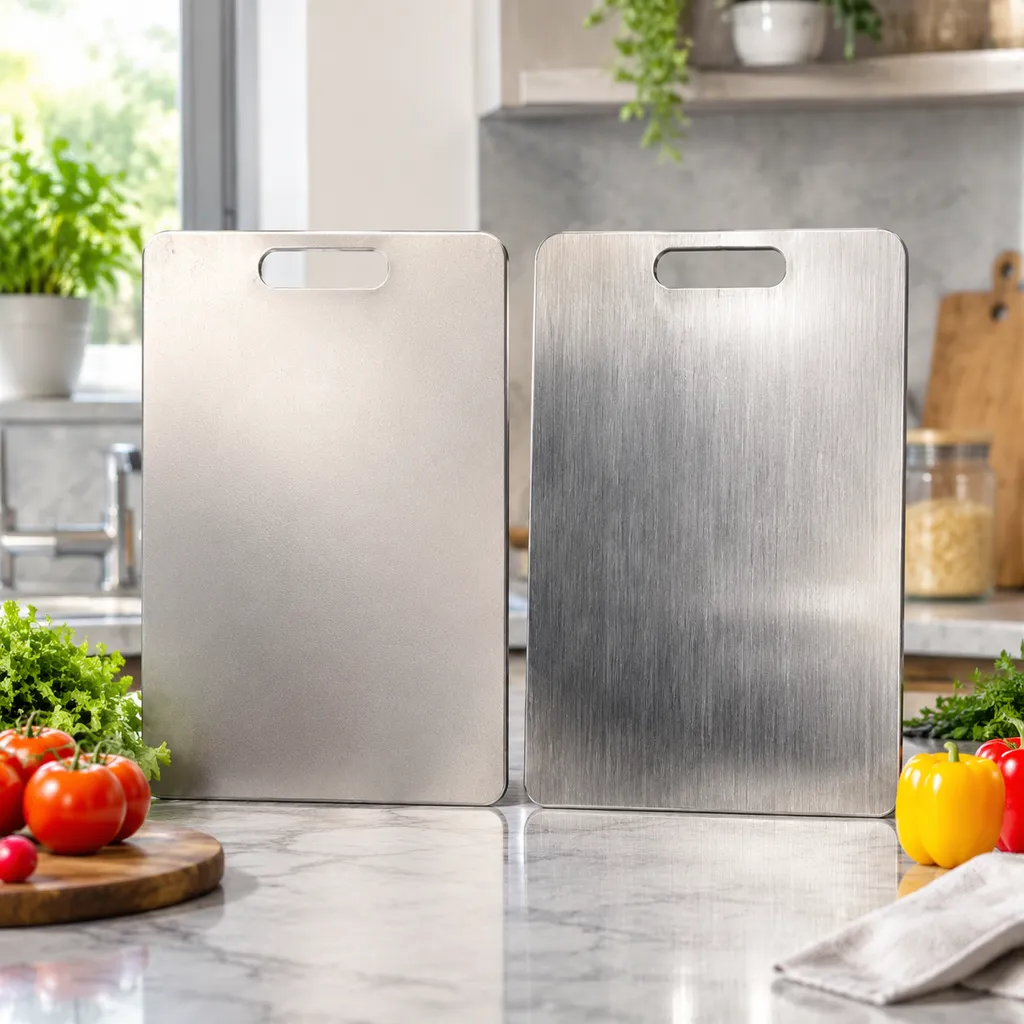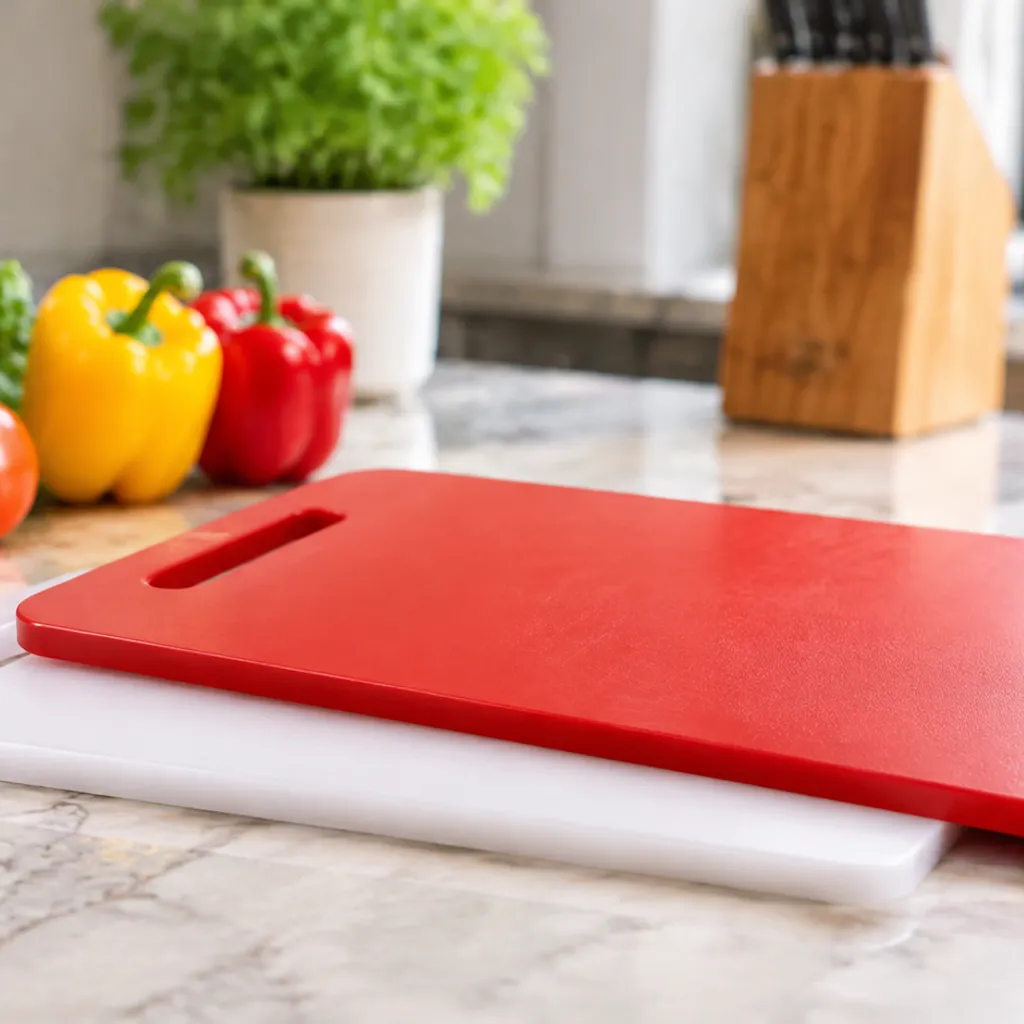
This guide compares material composition, durability and knife edge retention, kitchen grades, and maintenance so buyers can pick the right plastic cutting board materials for home or commercial prep.
Overview of Polyethylene vs. Polypropylene Cutting Boards
Polyethylene vs polypropylene cutting boards split by duty cycle: HDPE/PE favors tough commercial blanks, while PP supports shaped, colored, and TPE-overmolded retail boards with food-contact compliance documentation.
Polyethylene and polypropylene are widely used plastic cutting board materials for home kitchens, food preparation areas, and commercial environments. Both offer a non-porous cutting surface that is easy to clean, but their material properties create differences in flexibility, hardness, heat tolerance, and overall handling.[1]
A polyethylene vs polypropylene cutting board decision hinges on cutting feel, heat tolerance during cleaning, and how hard the board will work each day. Polyethylene grades - especially HDPE cutting boards - usually feel more flexible under the knife, while polypropylene stays firmer and typically handles hotter wash cycles more confidently.
What Are Polyethylene (PE) Cutting Boards?
Polyethylene cutting boards are made from polyethylene, a versatile plastic available in different densities.
Common benefits include:
- A relatively forgiving surface for knife edges
- Good resistance to moisture absorption
- Easy cleaning and routine sanitation
- Lightweight handling
- Suitability for general food preparation
HDPE cutting boards are often preferred when a firmer, more durable surface is required. Lower-density polyethylene is typically softer and more flexible, making it suitable for lighter preparation tasks.
What Are Polypropylene (PP) Cutting Boards?
Polypropylene cutting boards are made from polypropylene, a plastic material valued for its stiffness and resistance to heat. Compared with many polyethylene boards, PP can provide a firmer cutting feel and stronger shape retention.[2]
Typical characteristics include:
- A rigid and stable cutting surface
- Good moisture resistance
- Strong resistance to many everyday kitchen conditions
- Easy washing and sanitation
- Suitability for food preparation and kitchen service
Core Differences in Material Composition
The main difference between PE and PP is their polymer structure. Polyethylene is generally more flexible, while polypropylene is commonly stiffer and more resistant to heat. These differences affect how each board feels during cutting and how it performs under repeated kitchen use.[3]
| Feature | Polyethylene | Polypropylene |
|---|---|---|
| General feel | More flexible and forgiving | Firmer and more rigid |
| Cutting surface | Often softer | Often harder |
| Shape retention | Good, depending on density | Typically strong |
| Heat tolerance | Varies by grade | Generally higher than PE |
| Common use | General food preparation | Firm prep surfaces and heat-exposed areas |
Neither material is automatically best for every kitchen.
Polyethylene vs Polypropylene Cutting Board Performance Factors
Polyethylene vs polypropylene cutting boards split by duty cycle: HDPE/PE favors tough commercial blanks, while PP supports shaped, colored, and TPE-overmolded retail boards with food-contact compliance documentation.
Durability and Knife Scarring Resistance
Both polyethylene and polypropylene cutting boards are durable plastic cutting board materials for daily food preparation. Their surfaces will develop knife marks over time, but the rate depends on board thickness, plastic grade, knife pressure, and cutting frequency.
| Feature | Polyethylene | Polypropylene |
|---|---|---|
| Surface feel | Softer and more forgiving | Firmer and more rigid |
| Knife scarring | May show marks more easily | Generally offers stronger wear resistance |
| Everyday use | Comfortable for frequent chopping | Suitable for firm, stable cutting |
| Maintenance | Can require earlier resurfacing | Often maintains a smooth surface longer |
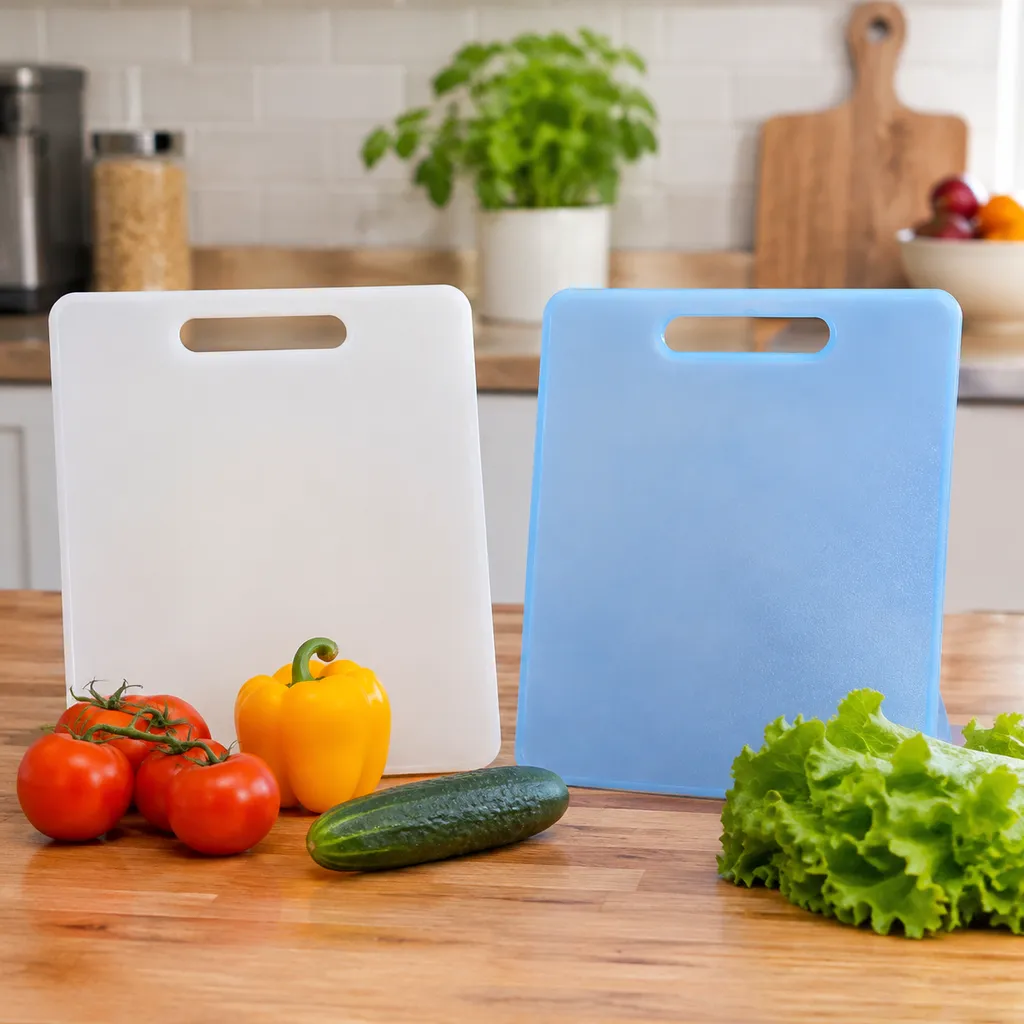
A thick, reversible cutting surface can extend practical use by allowing both sides to share normal wear. Deep grooves should not be ignored, as they are harder to clean thoroughly.[5]
Impact on Knife Blade Sharpness
Polyethylene is usually gentler on knife edges because its surface has a little more give. Polypropylene is firmer, which can provide a stable cutting platform but may feel less forgiving with repeated heavy chopping. In both cases, a sharp knife and controlled cutting pressure help support better knife edge retention.
The board should not be so hard that it feels like glass or stone under the blade. For home cooks and commercial kitchen teams, the best choice balances surface stability with a material that does not place unnecessary stress on the knife edge.
Heat Resistance and Dishwasher Safety
Polypropylene generally tolerates higher heat than polyethylene, making it a practical choice for kitchens that use hot-water washing or dishwasher cleaning. Polyethylene boards may also be dishwasher safe, but the exact result depends on the board's design, thickness, and manufacturer guidance.[2]
| Cleaning condition | Polyethylene | Polypropylene |
|---|---|---|
| Warm soapy water | Suitable | Suitable |
| Hot-water sanitation | Check product guidance | Often more suitable |
| Dishwasher cleaning | Confirm before use | Commonly suitable, subject to product guidance |
| Direct heat or cooking surface | Not suitable | Not suitable |
Never place either material directly on a stovetop, oven rack, or other cooking surface. Repeated excessive heat can cause warping or surface damage.
Food Safety, Hygiene, and Non-Porous Properties
Quality polyethylene and polypropylene boards have non-porous surfaces that do not readily absorb food liquids. This supports easier cleaning after preparing meat, seafood, vegetables, and bread.[1]
Choose boards made for food contact and follow the stated care instructions. Features such as a stable non-slip base, separate boards for different food groups, and a replaceable or resurfaceable design can further support safe kitchen routines. Our custom non-slip cutting boards combine practical cutting-board functionality with a more secure preparation surface.
Common Types and Grades Used in Kitchens
Polyethylene vs polypropylene cutting boards split by duty cycle: HDPE/PE favors tough commercial blanks, while PP supports shaped, colored, and TPE-overmolded retail boards with food-contact compliance documentation.
High-Density Polyethylene (HDPE) Boards
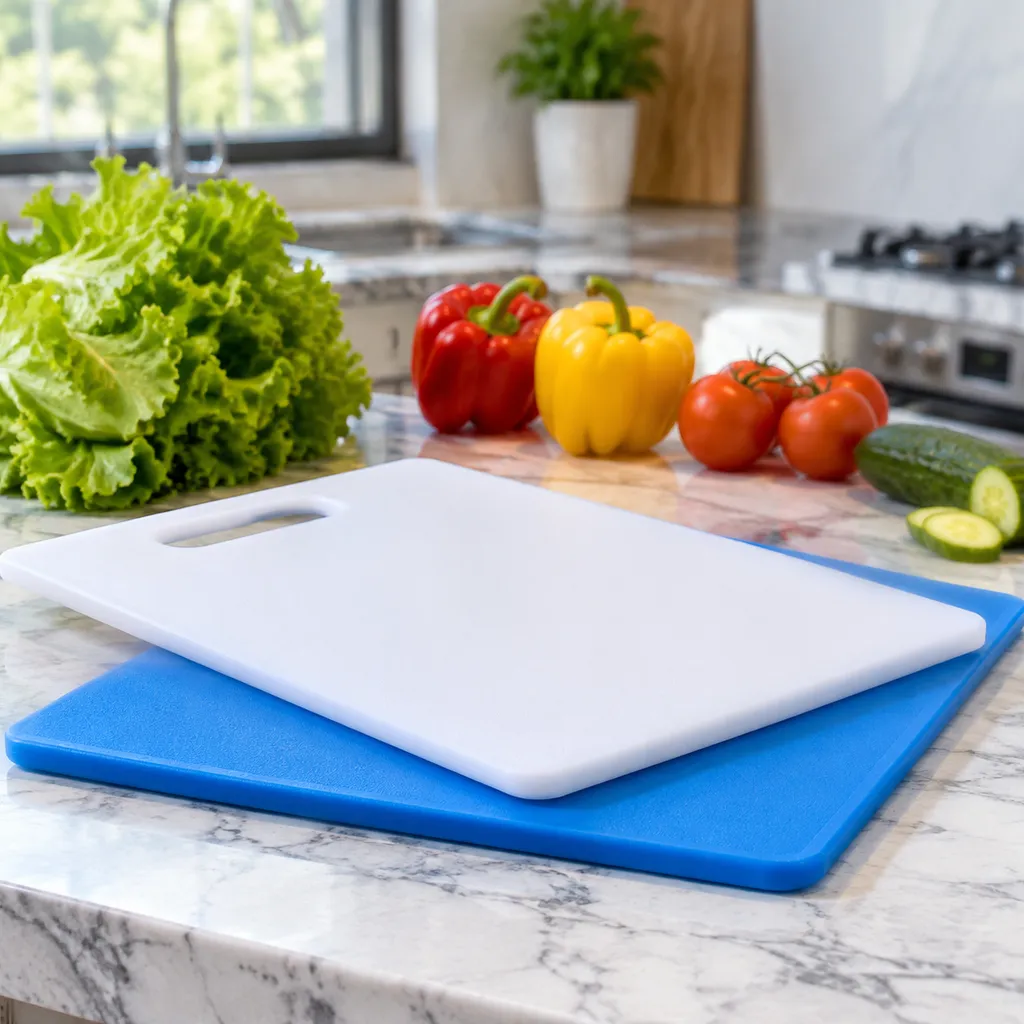
HDPE cutting boards are a common choice for home and commercial kitchens. Their dense structure provides good wear resistance, a stable cutting surface, and dependable performance during daily food preparation. HDPE is also non-porous, so it does not readily absorb food juices or odours when properly cleaned and sanitised.[4]
- Suitable for frequent chopping and slicing
- Firm enough for commercial kitchen prep work
- Available in different thicknesses, colours, and sizes
- Can be made as reversible or custom-shaped cutting boards
Low-Density Polyethylene (LDPE) Boards
LDPE boards are softer and more flexible than HDPE boards. This softer surface may feel gentler on knife edges, but it can also show cuts and grooves sooner under heavy use. LDPE is better suited to lighter preparation tasks where flexibility and easy handling matter more than maximum surface durability.
Standard and Co-Polymer Polypropylene Boards
Polypropylene cutting boards offer a firmer feel and generally higher heat tolerance than many polyethylene boards. Standard PP is useful for routine chopping and food preparation, while co-polymer PP can provide a more balanced combination of toughness and flexibility. These boards are often considered when a kitchen needs a rigid, easy-to-clean surface that can handle regular washing.
For businesses requiring specific dimensions, colours, or surface designs, our custom plastic cutting boards can be developed around the intended kitchen workflow and product requirements.
When to Choose Polyethylene vs Polypropylene Cutting Boards
Polyethylene vs polypropylene cutting boards split by duty cycle: HDPE/PE favors tough commercial blanks, while PP supports shaped, colored, and TPE-overmolded retail boards with food-contact compliance documentation.
When to Choose Polyethylene Cutting Boards
Polyethylene cutting boards are a practical choice when you need a softer, knife-friendly cutting surface for everyday food preparation. Their balance of durability, easy cleaning, and food-contact use makes them suitable for vegetables, meat, poultry, fish, and general kitchen prep.
Choose polyethylene when you need:
- A forgiving surface that helps protect knife edges
- A lightweight board for frequent handling
- A practical option for home kitchens and routine food preparation
- A large prep surface for slicing and chopping
- A cost-effective material for replacement or bulk purchasing
An HDPE cutting board is often a strong option for kitchens that need more rigidity and regular wear resistance. For restaurants and food-service operations, wholesale cutting boards can support consistent preparation across multiple workstations.
When to Choose Polypropylene Cutting Boards
Polypropylene cutting boards are a good fit when you prefer a firm, lightweight plastic cutting surface with good resistance to everyday kitchen use. They can work well for chopping, portioning, and general preparation where easy handling and simple sanitation are priorities.
Choose polypropylene when you need:
- A firm board for controlled cutting
- A lightweight surface that is easy to move and store
- A non-porous option for routine food preparation
- A plastic board that is simple to clean after use
- Separate boards for different food types or preparation tasks
The best choice depends on the board's thickness, surface finish, construction, and intended use. Material alone does not determine overall performance.
Commercial Kitchens vs. Home Cooking Environments
Commercial kitchens usually need boards that can handle frequent use, repeated cleaning, and organised food preparation. Home cooks may place greater value on weight, storage space, appearance, and everyday convenience.
| Use environment | Suitable priority | Practical material choice |
|---|---|---|
| Commercial kitchen | Frequent use, stable handling, easy cleaning | HDPE or durable polypropylene |
| Catering and food preparation | Lightweight handling and multiple boards | Polyethylene or polypropylene |
| Home kitchen | Convenience, storage, and general prep | Either material, based on board size and feel |
| Occasional cooking | Easy maintenance and low replacement cost | Lightweight polyethylene or polypropylene |
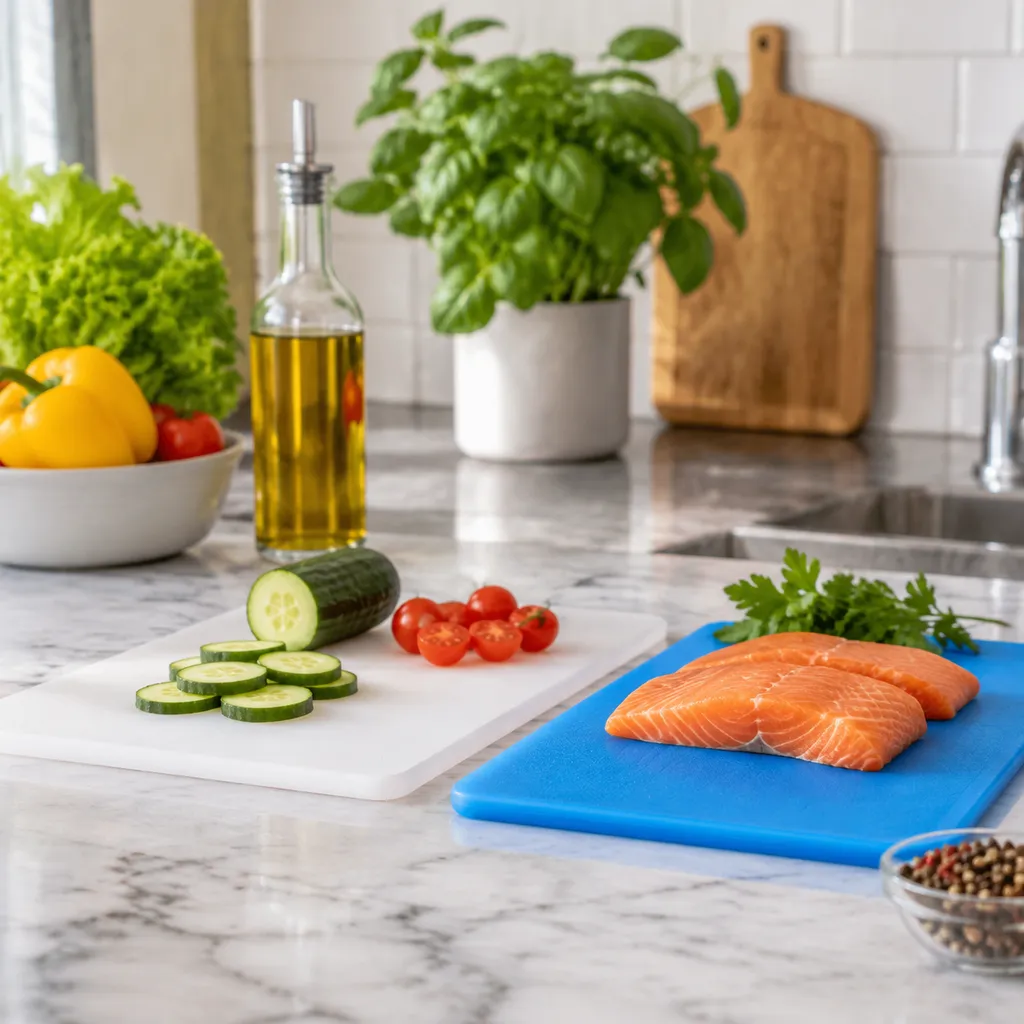
For any setting, use separate cutting boards for raw meat, seafood, and ready-to-eat foods where possible. A board should also be replaced when deep grooves, heavy warping, or persistent odours make thorough cleaning difficult.
How to Choose and Maintain Your Plastic Cutting Board
Polyethylene vs polypropylene cutting boards split by duty cycle: HDPE/PE favors tough commercial blanks, while PP supports shaped, colored, and TPE-overmolded retail boards with food-contact compliance documentation.
Key Factors to Consider Before Buying
When comparing a polyethylene vs. polypropylene cutting board, I focus on the board's daily workload, size, thickness, and care requirements. A suitable board should provide a stable cutting surface, resist excessive scoring, and suit the available cleaning routine.
| Buying factor | What to check |
|---|---|
| Material | Choose PE for a softer cutting feel or PP when greater heat resistance is important. |
| Size and thickness | Match the board to your preparation space and the volume of food you usually prepare. |
| Surface design | A reversible surface can extend usability; juice grooves help contain liquid from wetter foods. |
| Cleaning routine | Confirm that the board suits your preferred hand-washing or dishwasher routine. |
| Condition at purchase | Avoid boards with warping, deep marks, cracks, or uneven edges. |
For commercial kitchen prep boards, I recommend prioritising a stable, easy-to-clean design that fits the kitchen's food preparation workflow. A practical example is this plastic HDPE white cutting board, which is suited to straightforward food preparation and visual cleanliness.
Cleaning, Sanitizing, and Resurfacing Tips
Clean the board soon after use to prevent food residue from drying on the surface. Use hot water and dish soap, scrub both sides, rinse thoroughly, and allow the board to dry completely before storage.[5]
For regular sanitizing:
- Use a food-safe sanitizing method suitable for the board material.
- Keep raw meat, seafood, and ready-to-eat foods separated during preparation.
- Avoid storing the board while it is damp.
- Clean grooves, corners, and edges carefully.
- Follow the manufacturer's instructions before placing the board in a dishwasher.
Light surface marks may be managed through professional resurfacing when the board remains structurally sound. Resurfacing should not be used to hide deep cuts, cracks, or serious warping.
Signs It Is Time to Replace Your Cutting Board
Replace a plastic cutting board when damage can no longer be cleaned effectively or when the surface becomes unstable. Key warning signs include:
- Deep knife scars that trap food or moisture
- Cracks, splits, or broken edges
- Permanent warping or rocking on the worktop
- Heavy staining combined with persistent odour
- A rough, shedding, or badly worn surface
- Damage that remains after thorough cleaning
Once deep wear affects hygiene or safe handling, replacement is the better choice.
We are a professional cutting board manufacturer and OEM/ODM kitchenware supplier. Request a quote with preferred polymer grade (HDPE or polypropylene), size, thickness, and surface details when you need boards matched to a defined prep workflow.
References
Polyethylene vs polypropylene cutting boards split by duty cycle: HDPE/PE favors tough commercial blanks, while PP supports shaped, colored, and TPE-overmolded retail boards with food-contact compliance documentation.
- eCFR - 21 CFR 177.1520 Olefin polymers (food-contact polyethylene and polypropylene) ↩
- Polymer Database - Polypropylene (thermal and material properties) ↩
- Polymer Database - Polyethylene (flexibility and density grades)
- Wikipedia - High-density polyethylene (HDPE) ↩
- eCFR - 21 CFR Part 110 Current Good Manufacturing Practice (sanitation context) ↩
- NSF International - Certified food equipment listing (commercial food-contact equipment search)