Bamboo vs Plastic Cutting Board Basics
Bamboo vs plastic cutting boards trade renewable aesthetics against washability and dimensional consistency; virgin polymer boards generally offer more predictable sanitation and OEM branding control for high-volume retail programs.
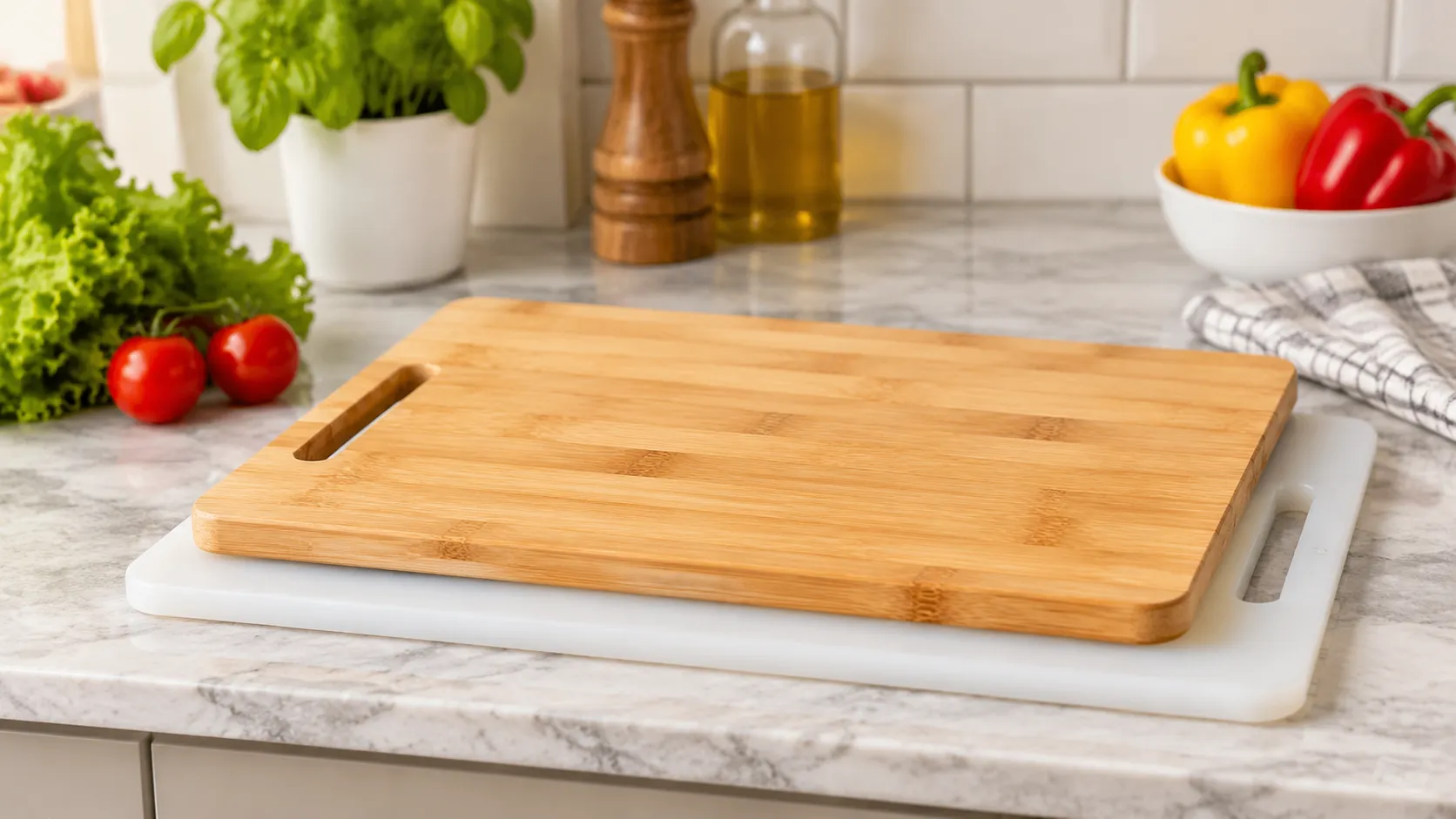
Choosing the right food preparation surface is essential for culinary efficiency, food safety, and kitchen aesthetics. In the debate of bamboo vs plastic cutting board options, both materials serve distinct functional roles in modern residential and commercial kitchens.
Overview of Bamboo Cutting Boards
Bamboo cutting boards are engineered from rapidly renewable bamboo grass rather than traditional timber. To create a durable prep surface, mature stalks of organic bamboo are harvested, sliced into strips, kiln-dried, and bonded together under immense hydraulic pressure using food-safe resins.
- Natural Fiber Density: Bamboo fibers are naturally dense and rigid, creating a hard, resilient surface capable of withstanding heavy daily slicing and dicing.
- Aesthetic Appeal: The natural grain patterns and warm tones give bamboo the look of a premium wood chopping block, making it ideal for both kitchen prep and tabletop serving.
- Sustainable Kitchenware Profile: Because bamboo regenerates rapidly without replanting, it serves as an eco-conscious alternative to traditional hardwoods.
Overview of Plastic Cutting Boards
Plastic cutting boards are manufactured from engineered synthetic polymers, most commonly High-Density Polyethylene (HDPE) or Polypropylene (PP). These boards are injection-molded or sheet-extruded to form a lightweight, uniform prep board designed for utilitarian use.
- Non-Porous Construction: The synthetic, solid-state surface prevents raw meat juices, liquids, and moisture from penetrating deep into the board.
- Sanitary Utility: Plastic boards are compatible with industrial cleaning protocols and high-heat sanitizing cycles, supporting daily kitchen sanitation routines.
- Versatile Handling: Often designed with integrated non-slip borders, juice grooves, and distinct color variations, plastic boards provide a cost-effective, practical utility tool for busy meal prep environments.
Key Differences: Bamboo vs Plastic Cutting Boards
Bamboo vs plastic cutting boards trade renewable aesthetics against washability and dimensional consistency; virgin polymer boards generally offer more predictable sanitation and OEM branding control for high-volume retail programs.
When comparing a bamboo vs plastic cutting board, the choice comes down to structural strength, blade interaction, and presentation. As a professional cutting board manufacturer, we build both surfaces to meet strict commercial food preparation surface standards, yet each material behaves differently under daily culinary prep.
| Feature | Bamboo Cutting Boards | Plastic Cutting Boards |
|---|---|---|
| Material Base | Compressed organic bamboo grass fibers | Food-grade polyethylene (HDPE) or polypropylene |
| Surface Hardness | Extremely dense and rigid | Moderately soft, resilient, and impact-resistant |
| Knife Edge Impact | Harder surface; requires regular blade honing | High knife edge friendliness; absorbs blade impact |
| Wear Pattern | Resists shallow scratches; can crack if dried out | Develops surface cut grooves; never splinters or cracks |
| Design & Display | Warm, natural grain suitable for serving | Functional, color-coded, modern, and utilitarian |
Material Composition and Durability
- Bamboo boards: Engineered by compressing natural bamboo strips under high pressure. Bamboo is naturally dense and non-porous, offering high resistance to water absorption and warping when properly conditioned with mineral oil.
- Plastic boards: Manufactured from solid, high-density polymers. Understanding raw plastic cutting board material shows why these boards excel in high-impact prep environments: they do not split, chip, or warp under continuous moisture exposure.
- Structural lifespan: Bamboo withstands heavy chopping without gouging, while heavy-duty plastic absorbs heavy cleaver strikes without chipping.
Knife Friendliness and Surface Wear
- Blade edge retention: Bamboo contains natural silica, making its surface significantly harder than traditional wood chopping blocks. Repeated heavy chopping dulls fine culinary knives faster, requiring frequent blade maintenance.[1]
- Surface scarring: Plastic offers superior knife edge friendliness. The softer surface cushions the blade tip on impact, preserving sharpness.
- Micro-groove formation: Knife strikes leave tiny tracks in synthetic boards over time. For heavy commercial workflows, selecting premium custom plastic cutting boards engineered with dense polymers minimizes deep scoring and extends usable life.
Aesthetics and Kitchen Style
- Natural warmth: Bamboo provides an organic, layered grain that fits open-concept residential kitchens, working seamlessly as both a prep station and a tabletop charcuterie board.
- Streamlined utility: Plastic delivers a minimalist, modern aesthetic. It supports systematic cross contamination prevention through standardized color-coding (red for meat, green for produce) in modern culinary workflows.[1]
Bamboo vs Plastic Cutting Board Hygiene and Food Safety
Bamboo vs plastic cutting boards trade renewable aesthetics against washability and dimensional consistency; virgin polymer boards generally offer more predictable sanitation and OEM branding control for high-volume retail programs.
When evaluating a food preparation surface, hygiene and cross contamination prevention are non-negotiable.
| Hygiene Feature | Bamboo Cutting Board | Plastic Cutting Board |
|---|---|---|
| Porosity | Dense, minimal liquid absorption | Completely non-porous (when smooth) |
| Surface Scarring | Resists deep knife gouges | Easily develops micro-grooves over time |
| Bacterial Growth Risk | Low due to fast drying and natural fibers | High once deep knife grooves accumulate |
| Dishwasher Safe | No (hand wash only) | Yes (heat-resistant variants) |
| Chemical Tolerance | Mild soap and food-grade mineral oil | Bleach and harsh chemical sanitizers |
Porosity and Bacteria Resistance
The structural density of organic bamboo gives it natural antimicrobial properties. Because bamboo absorbs very little moisture, it dries rapidly, denying bacteria the damp environment required to multiply. Its hard surface resists deep scarring, keeping bacteria from embedding beneath the surface.[1]
Plastic boards are non-porous out of the box, offering strong initial protection against raw meat juices.[5] However, routine cutting creates micro-grooves across the plastic. These knife scars trap food debris, moisture, and microbes, making thorough cleaning difficult as the board ages.[2]
Sanitization and Dishwasher Compatibility
Plastic excels in dishwashing safety. You can run plastic boards through commercial or high-heat residential dishwashers, where prolonged exposure to hot water and detergents sanitizes the surface completely. For heavy prep environments handling poultry and red meat, this heat cycle is a major advantage.[1]
Bamboo demands gentler care to maintain structural integrity:
- Hand-Wash Only: Wash immediately after use with warm water and mild dish soap.
- No Soaking: Never submerge bamboo in water to avoid warping, cracking, or splitting.
- Periodic Oiling: Apply mineral oil monthly to protect the fibers and retain moisture resistance.
Pros and Cons of Bamboo Cutting Boards
Bamboo vs plastic cutting boards trade renewable aesthetics against washability and dimensional consistency; virgin polymer boards generally offer more predictable sanitation and OEM branding control for high-volume retail programs.
When comparing a bamboo vs plastic cutting board, evaluating the specific strengths and operational trade-offs of bamboo helps determine if it suits your kitchen.
| Feature | Bamboo Performance |
|---|---|
| Material Origin | Rapidly renewable grass |
| Surface Hardness | High density, resists deep groove scarring |
| Cleaning Method | Hand-wash only with mild soap |
| Maintenance | Periodic conditioning with food-grade mineral oil |
| Primary Use | All-around prep, slicing, serving, butcher block alternative |
Advantages of Bamboo
- Hardness and Durability: Bamboo fibers are dense, making the food preparation surface naturally resistant to warping and deep gouges where bacteria tend to hide.
- Eco-Friendly Material: Sourced from fast-growing organic bamboo, these boards offer a renewable alternative to petroleum-based polymers.
- Multifunctional Design: Premium bamboo boards often feature a deep perimeter juice groove to catch liquids, allowing them to transition seamlessly from a prep station to a serving platter.
- Minimal Moisture Absorption: Bamboo absorbs less water than traditional hardwoods, reducing the risk of swelling and split edges over time.
Drawbacks and Maintenance Requirements
- Not Dishwasher Safe: High heat and prolonged exposure to water in automated dishwashers can crack and delaminate bamboo layers. They require hand-washing and prompt air-drying.[1]
- Routine Oiling Needed: To maintain surface hydration and prevent splintering, bamboo demands regular application of mineral oil or board wax.
- Blade Wear: Because bamboo has a high silica content and a hard exterior, frequent heavy chopping will dull knife edges faster than softer plastics.
Pros and Cons of Plastic Cutting Boards
Bamboo vs plastic cutting boards trade renewable aesthetics against washability and dimensional consistency; virgin polymer boards generally offer more predictable sanitation and OEM branding control for high-volume retail programs.
When evaluating a bamboo vs plastic cutting board, plastic remains a workhorse in busy commercial prep stations and everyday home kitchens.
Advantages of Plastic
Synthetic boards are engineered for heavy utility, convenience, and simplified kitchen sanitation:
- Dishwasher Safe: Unlike organic materials, synthetic surfaces handle the high heat and steam of automatic dishwashers without warping, splitting, or swelling.
- Cross-Contamination Prevention: Plastic makes color-coded zoning easy. Using a dedicated plastic HDPE white cutting board for poultry or raw meat keeps fluids isolated from produce surfaces.
- Zero Oil Maintenance: You never need to season or oil plastic surfaces; they are completely non-porous right out of the box.
- Lightweight and Budget-Friendly: High-density polyethylene boards are economical to produce, easy to stack, and simple to maneuver around commercial kitchens.
Drawbacks and Long-Term Wear
While practical, plastic cutting boards have definite lifespan limits:
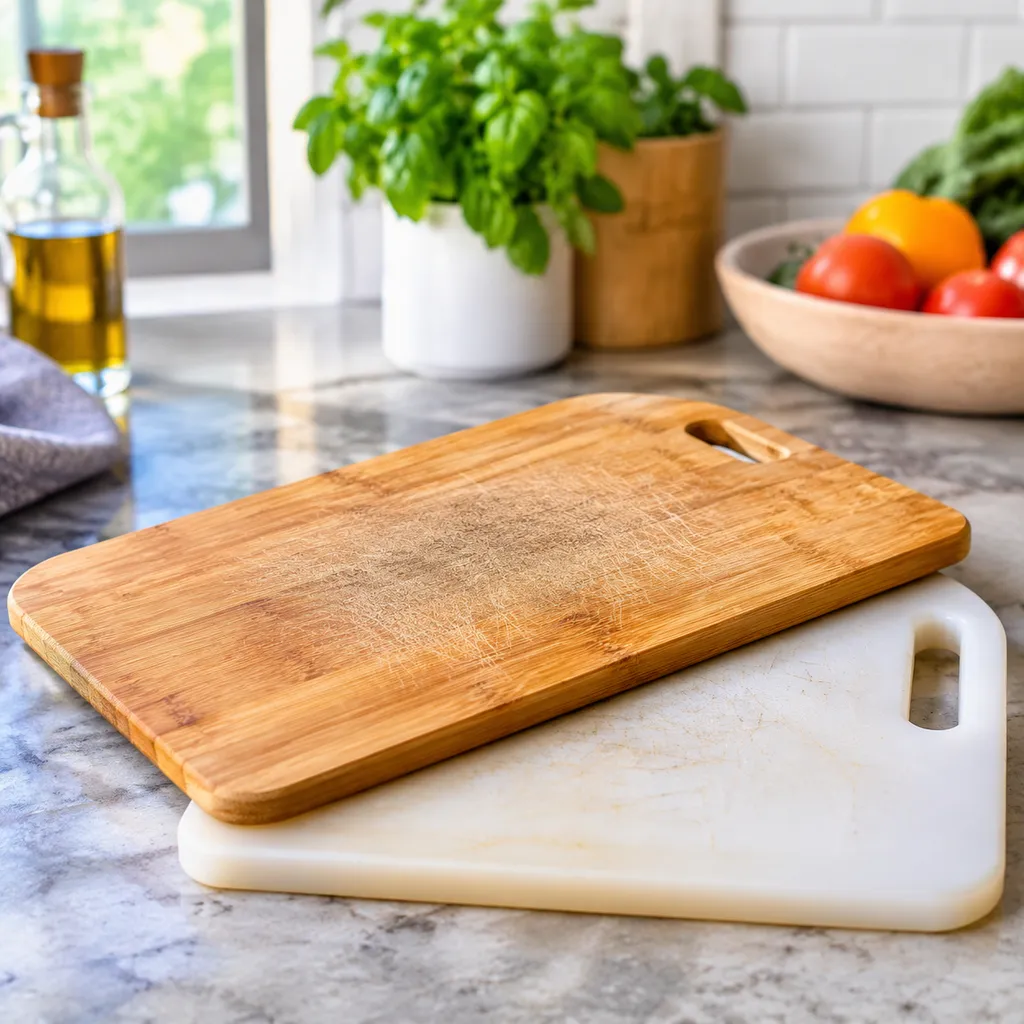
- Prone to Deep Grooves: Every knife strike leaves small scoring marks. Over time, these deep cut lines become micro-crevices where bacteria and food residue settle, making them difficult to sanitize manually.[2]
- Microplastic Shedding: Heavy chopping on worn synthetic surfaces can release tiny microplastic shavings directly into your food preparation area.[3][4]
- Staining and Odor Retention: Ingredients like turmeric, beets, and raw garlic can cause permanent discoloration and stubborn odor buildup on older surfaces.
- Shorter Usable Lifespan: Unlike wood or bamboo, which can be resurfaced or oiled, a heavily scarred plastic board must simply be discarded and replaced once the surface degrades.
Environmental Impact of Bamboo vs Plastic Cutting Boards
Bamboo vs plastic cutting boards trade renewable aesthetics against washability and dimensional consistency; virgin polymer boards generally offer more predictable sanitation and OEM branding control for high-volume retail programs.
When evaluating a bamboo vs plastic cutting board, environmental impact is often the deciding factor. As a manufacturer committed to sustainable kitchenware, we examine the entire product lifecycle - from raw material sourcing to end-of-life disposal.
Eco-Friendliness of Renewable Bamboo
Bamboo provides a clear advantage in sustainability due to its rapid growth and minimal ecological footprint:
- Rapid Regeneration: Bamboo is a grass, not a tree, capable of reaching full maturity within a few years without replanting or deforestation.
- Low Chemical Dependency: Cultivating organic bamboo requires virtually no chemical fertilizers or pesticides, preserving local soil health.
- Natural Biodegradability: When a pure bamboo board reaches the end of its usable life, it serves as a completely biodegradable material that breaks down naturally without generating toxic residues.
Recyclability and Plastic Waste
Plastic boards carry a substantially higher ecological cost throughout production and disposal:
- Petroleum Reliance: Standard plastic cutting boards rely on non-renewable fossil fuels, contributing to carbon emissions during extraction and polymer synthesis.
- Difficult Recycling: Although made from polymers like polypropylene or HDPE, used plastic boards scarred with deep knife grooves and trapped oils are rarely accepted by municipal recycling facilities.
- Microplastics and Landfill Runoff: Most discarded plastic boards end up in landfills, where they persist for a very long time while fragmenting into harmful microplastics.
We ensure that all our raw materials adhere to rigorous certifications and testing to guarantee that every board meets global eco-compliance and food-safety standards.
Which Cutting Board Should You Choose?
Bamboo vs plastic cutting boards trade renewable aesthetics against washability and dimensional consistency; virgin polymer boards generally offer more predictable sanitation and OEM branding control for high-volume retail programs.
Choosing between a bamboo vs plastic cutting board comes down to how you prepare food, clean up, and manage your kitchen routine. Both surfaces serve distinct roles in food prep, and many commercial setups actually run both side by side to maximize hygiene and prep speed.
| Feature | Bamboo Cutting Board | Plastic Cutting Board |
|---|---|---|
| Best Food Prep | Breads, cooked meats, cheeses, vegetables | Raw poultry, raw red meats, seafood |
| Maintenance | Hand wash only, periodic mineral oil application | Dishwasher safe, bleach-tolerant |
| Surface Life | Long-lasting, highly resistant to deep gouges | Shorter lifespan, develops knife grooves quickly |
| Eco Profile | Rapidly renewable grass, biodegradable | Petroleum-derived, recyclable depending on polymer grade |
Best Applications for Bamboo Boards
We design bamboo boards specifically for dry, clean, or presentation-ready tasks.
- Slicing cooked proteins and bread: Bamboo provides a firm, stable food preparation surface that resists juices soaking in, especially when crafted with a deep perimeter groove.
- Charcuterie and kitchen-to-table serving: The natural grain offers an appealing aesthetic that doubles as a serving platter.
- Chopping firm vegetables and herbs: High-density organic bamboo holds up against repetitive slicing without collecting the fuzzy micro-grooves that trap food debris.
- Eco-conscious prep spaces: For commercial lines or home chefs focused on sustainable kitchenware, bamboo delivers a dependable, plant-based footprint.
Best Applications for Plastic Boards
Plastic boards remain the workhorse for high-risk, moisture-heavy food processing.
- Raw meat and poultry preparation: Plastic allows for rigorous cross contamination prevention because you can sanitize it at temperatures that would damage natural wood fibers.
- High-heat sanitizing cycles: Commercial dishwashing safety is the primary advantage here; plastic handles high-temperature rinse cycles and chemical sanitizers without warping immediately.
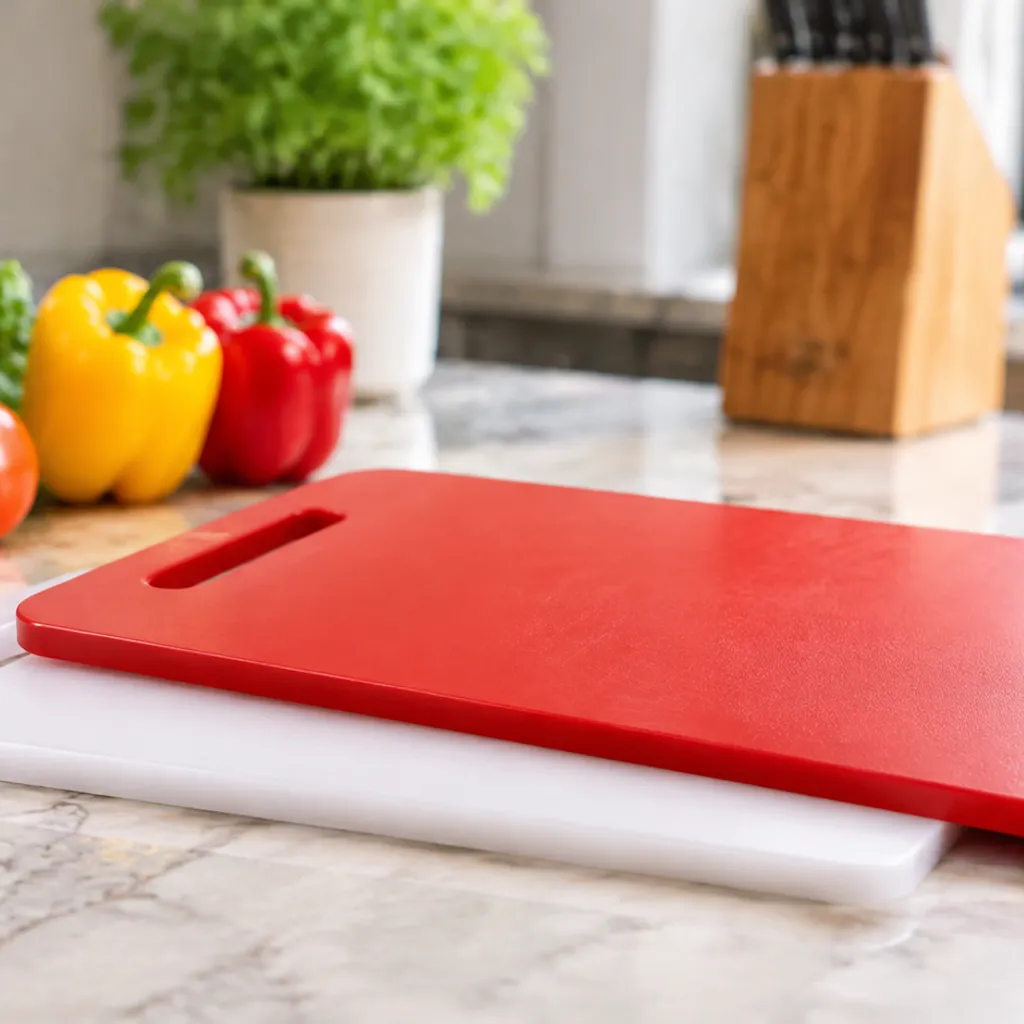
- Color-coded prep systems: Professional kitchens rely on standardized plastic board colors (red for meat, yellow for poultry, green for produce) to keep food safety clear across team stations.
Key Factors to Consider Before Buying
- Cleaning Routine: If running boards through an automated high-temp dishwasher is non-negotiable, heavy-duty plastic is the standard choice. If hand-washing and occasional oiling fit your workflow, bamboo provides better long-term surface durability.
- Surface Durability and Replacement Cycles: Plastic boards develop deep knife scars quickly, which can harbor bacteria and require frequent scraping or replacement. Bamboo resists scarring far longer, extending its working lifespan.
- Knife Edge Friendliness: Quality plastic yields slightly more under sharp edges, protecting softer steel blades, whereas dense bamboo requires slightly more attention to blade honing.
- Brand Customization: If you are sourcing for retail or private brand expansion, our OEM/ODM kitchenware solutions and wholesale cutting boards programs allow you to customize board density, integrated handles, juice grooves, and material combinations to balance food safety and table appeal.
References
Bamboo vs plastic cutting boards trade renewable aesthetics against washability and dimensional consistency; virgin polymer boards generally offer more predictable sanitation and OEM branding control for high-volume retail programs.
- University of Maine Cooperative Extension - Bulletin #3108: Safe Cutting Boards (Materials, Usage, and Cleaning Tips)
- U.S. FDA - Cleaning (Food Safety for Moms-to-Be): wash, sanitize, and replace worn cutting boards
- Environmental Health Perspectives / PMC - Simulated Microplastic Release from Cutting Boards (PE/PP boards)
- Yadav et al., Environ. Sci. Technol. - Cutting Boards: An Overlooked Source of Microplastics in Human Food (abstract record)
- University of Arizona Cooperative Extension - Cutting Boards (Plastic vs. Wood) AZ1076 (PDF)